
ISBN-13: 9780190067250
Hardcover
288 Pages
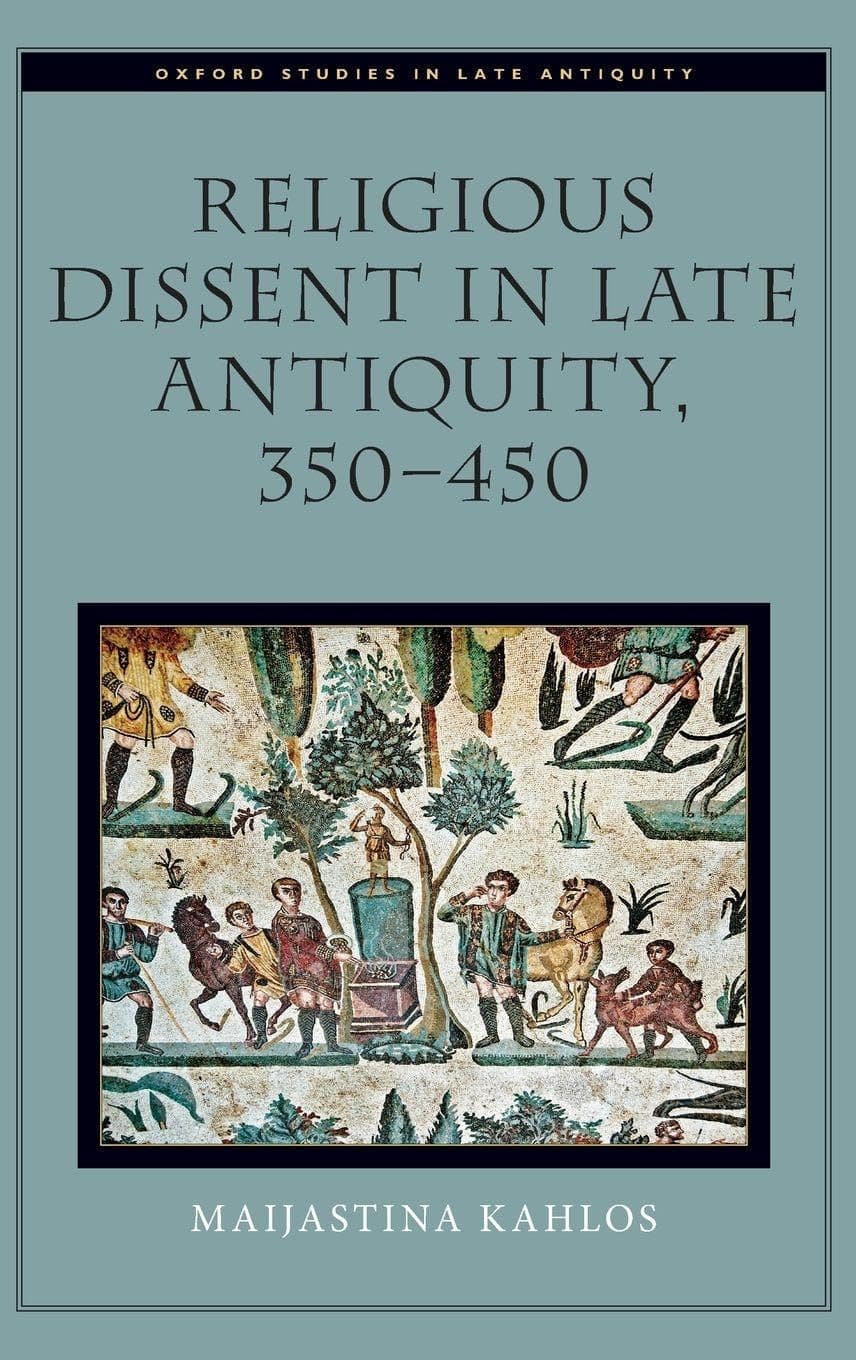
Religious Dissent in Late Antiquity, 350-450
by Maijastina Kahlos
Rent This Book
Returns in 60 days
$38.98/ 60 days
Please Note: Rental books are typically used and do not come with any unused access code cards.
Free returns on all rentals
Product Details
ISBN-139780190067250
ISBN-10019006725X
PublisherOxford University Press
Published2019-12-11
Edition1
LanguageEnglish
FormatHardcover
Pages288
About This Book
Religious Dissent in Late Antiquity reconsiders the religious history of the late Roman Empire, focusing on the shifting position of dissenting religious groups - conventionally called 'pagans' and 'heretics'. The period from the mid-fourth century until the mid-fifth century CE witnessed a significant transformation of late Roman society and a gradual shift from the world of polytheistic religions into the Christian Empire. This book challenges the many straightforward melodramatic narratives of the Christianisation of the Roman Empire, still prevalent both in academic research and in popular non-fiction works. Religious Dissent in Late Antiquity demonstrates that the narrative is much more nuanced than the simple Christian triumph over the classical world. It looks at everyday life, economic aspects, day-to-day practices, and conflicts of interest in the relations of religious groups. Religious Dissent in Late Antiquity addresses two aspects: rhetoric and realities, and consequently, delves into the interplay between the manifest ideologies and daily life found in late antique sources. It is a detailed analysis of selected themes and a close reading of selected texts, tracing key elements and developments in the treatment of dissident religious groups. The book focuses on specific themes, such as the limits of imperial legislation and ecclesiastical control, the end of sacrifices, and the label of magic. Religious Dissent in Late Antiquity examines the ways in which dissident religious groups were construed as religious outsiders, but also explores local rituals and beliefs in late Roman society as creative applications and expressions of the infinite range of human inventiveness.