
ISBN-13: 9780197581629
Paperback
1076 Pages
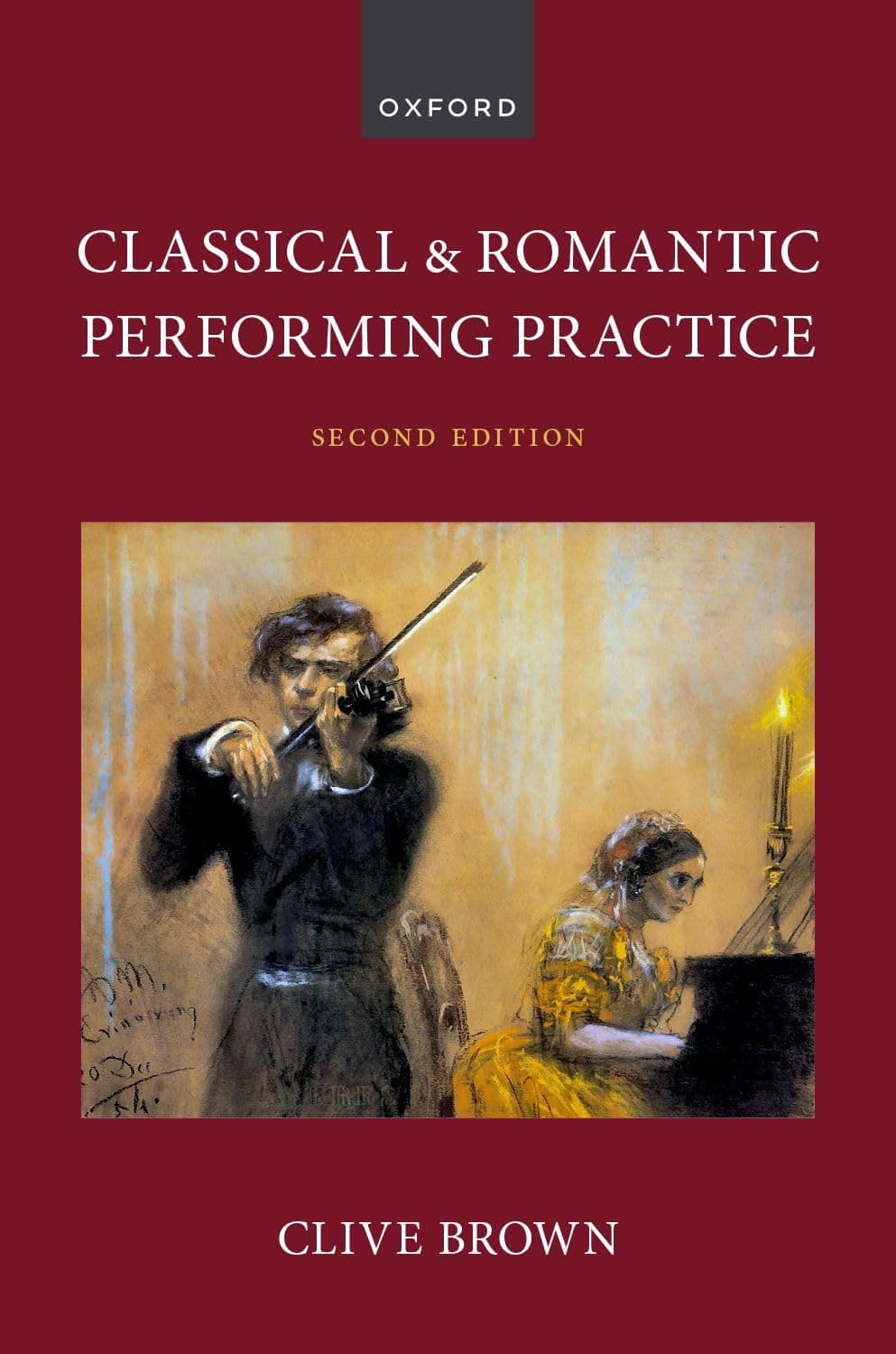
Classical and Romantic Performing Practice
by Clive Brown
Rent This Book
Returns in 60 days
$33.98/ 60 days
Please Note: Rental books are typically used and do not come with any unused access code cards.
Free returns on all rentals
Product Details
ISBN-139780197581629
ISBN-100197581625
PublisherOxford University Press
Published2025-02-18
Edition2
LanguageEnglish
FormatPaperback
Pages1076
About This Book
This book investigates the changing ways in which composers employed notation and musicians understood it between the middle of the eighteenth century and the start of the twentieth century. While explicit notational practices were increasingly the norm throughout this time, many aspects of performance--even as late as the late nineteenth century--were assumed rather than specified and it was still widely understood that much had to be read between the lines. Furthermore, during the twentieth century the intended implications of many previous notational practices were gradually forgotten and are now generally misunderstood, while others--such as continuous vibrato and the meticulous observance of vertical synchrony and notated rhythms--differ radically from anything the composer might have envisaged. Drawing upon early recordings, documentary evidence, and the few surviving mechanical instruments, author Clive Brown investigates how we might rediscover the subliminal messages Classical and Romantic music notation was intended to convey to performers and argues that composers' intentions for their notation ought not to be confused with their expectations for its execution. The use of expressive practices that often involve substantial deviations from a conventional modern reading of the notation is not only a legitimate but also an essential element in getting closer to the composer's conception. The following topics are investigated over the course of sixteen chapters: metrical and rhetorical accentuation, dynamics, articulation, string-instrument bowing, phrasing, expression, tempo, tempo flexibility, ornamentation and improvisation, asynchrony, arpeggiation, rhythmic flexibility, sliding effects (portamento), and trembling effects (tremolo, vibrato). The book offers ample evidence to demonstrate that, in many respects, the sound worlds in which Mozart, Beethoven, Wagner, and Brahms created their music were more radically different from ours than is generally assumed. After it was published in 1999, the first edition of Classical and Romantic Performing Practice 1750-1900 quickly ensconced itself as a must-read for all students, scholars, and performers in historically informed performance. The revised and expanded second edition incorporates new information resulting from the author's continued research and practical experimentation since the publication of the original edition, and has benefitted greatly from his work with a succession of talented doctoral students over the years.