
ISBN-13: 9780197641347
Hardcover
404 Pages
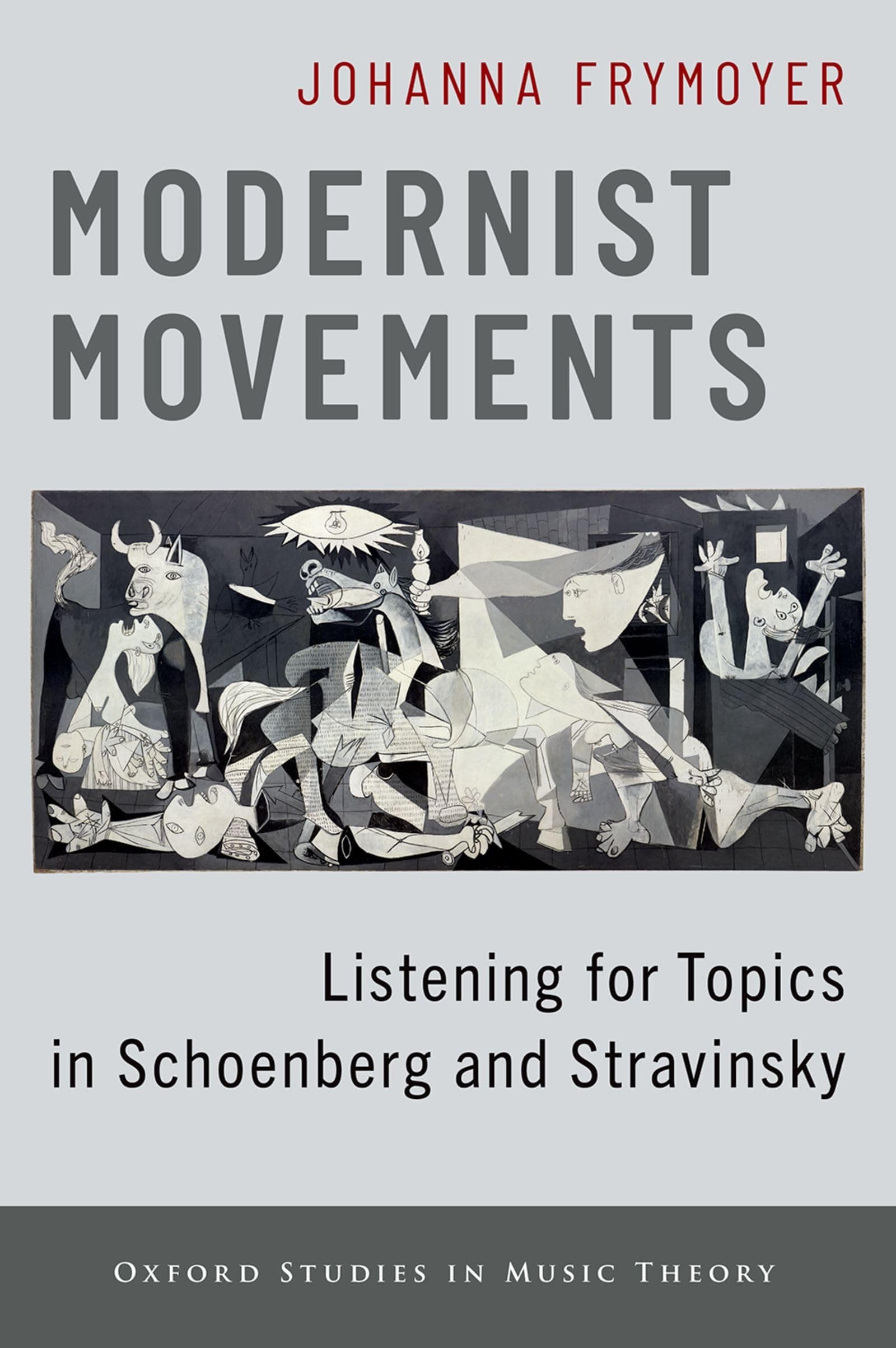
Modernist Movements: Listening for Topics in Schoenberg and Stravinsky
by Johanna Frymoyer
Rent This Book
Returns in 60 days
$49.12/ 60 days
Please Note: Rental books are typically used and do not come with any unused access code cards.
Free returns on all rentals
Product Details
ISBN-139780197641347
ISBN-100197641342
PublisherOxford University Press
Published2025-06-18
LanguageEnglish
FormatHardcover
Pages404
About This Book
Topic theory examines the lexicon of conventions that emerged in the late eighteenth century through which composers evoked dances, marches, hunting, the pastoral, and the supernatural. While scholars have explored ad hoc applications of the theory in later repertories, author Johanna Frymoyer begins with fundamental methodological questions of if, why, and how analysts ought to apply topic theory--a method tailored to eighteenth-century historical and aesthetic contingencies--to modernist repertory. Advancing topic theory beyond its foundations in semiotics to incorporate insights from cognition, Frymoyer argues that topical identification and interpretation are governed by mental categories and prototypicality effects, and that topics function as mnemonics of bodily movement (such as dance). Her approach explains how listeners past and present, though they may not be able to dance a minuet or march in synchronized military procession, nonetheless preserve these historically--embedded patterns of movement in memory. Topic theory therefore provides important insight into how listeners engage imaginatively--choreographically, one could say--with musical meaning in ways that are experienced as transhistorical, embodied, and intersubjective. Illuminated by innovative analyses of Schoenberg and Stravinsky and placing topics in dialogue with considerations of twelve-tone style, metrical irregularity, accessibility, and agency, Modernist Movements is an important contribution to topic theory, modernist studies, and embodied cognition.