
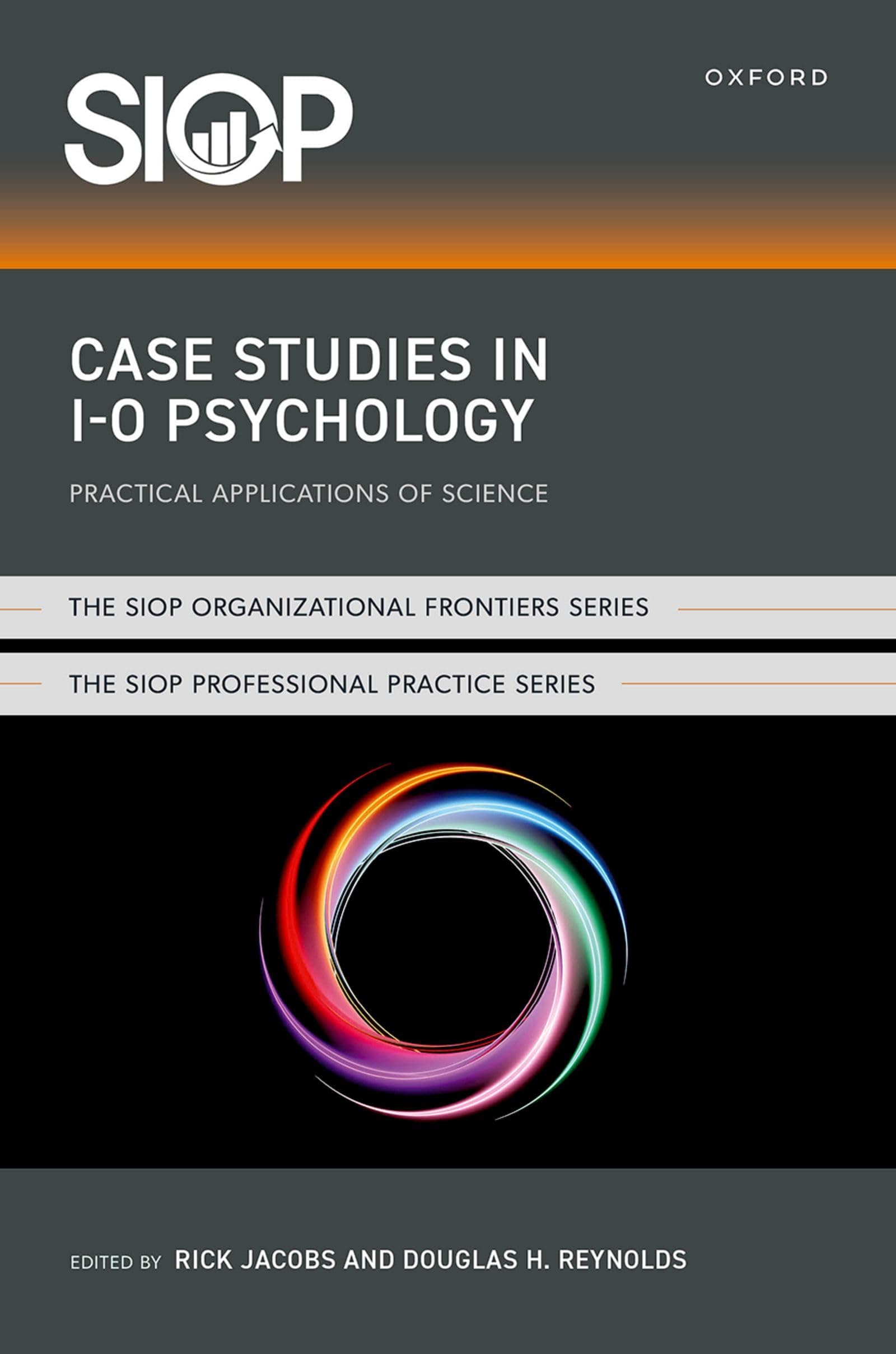
ISBN-13: 9780197692257
Paperback
536 Pages
Case Studies in I-O Psychology: Practical Applications of Science
by
Rent This Book
Returns in 60 days
$27.72/ 60 days
Please Note: Rental books are typically used and do not come with any unused access code cards.
Free returns on all rentals
Product Details
ISBN-139780197692257
ISBN-100197692257
PublisherOxford University Press
Published2025-10-03
LanguageEnglish
FormatPaperback
Pages536
About This Book
As a discipline, industrial-organizational (I-O) psychology has long embraced its role as both a science and a practice; the field is a personification of the scientist-practitioner model. However, the translation of new science into accepted practice can be challenging, and the field often wrestles with the best way to motivate a rich dialogue across the breadth of the field, from science to practice. The editors of this book believe that case studies are an underutilized resource for enriching this dialogue. In this volume are assembled 20 cases that show how I-O psychologists created programs backed by theory and research to address real-world issues in organizations. The cases are diverse and cover several areas of this discipline: how we select people to fill jobs, develop leaders, and facilitate inclusion and belongingness; as well as cases that show how technology is being deployed in our work, and how we can promote safe and healthy workplaces. This book is an important tool in educating future I-O psychologists in the application of science in our practice. It is also a useful guide for practitioners, providing insight into how various interventions have been implemented successfully and the lessons that were learned along the way. Throughout the book, the underlying premise is that science and practice are interdependent parts of a cycle, where each piece informs the other - a cycle that, when balanced, leads to more effective organizational programs and triggers new questions to be answered by our research.