
HomeLibraryFeedback That Sticks: The Art of Effectively Communicating Neuropsychological Assessment Results
ISBN-13: 9780199765690
Hardcover
336 Pages
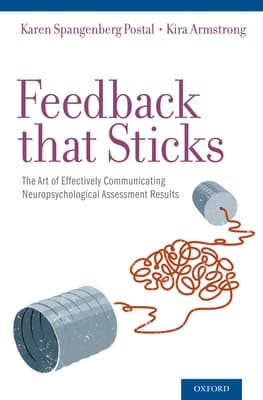
Feedback That Sticks: The Art of Effectively Communicating Neuropsychological Assessment Results
by Spangenberg Postal, Karen, Armstrong, Kira
Rent This Book
Returns in 60 days
$26.00/ 60 days
Please Note: Rental books are typically used and do not come with any unused access code cards.
Free returns on all rentals
Product Details
ISBN-139780199765690
ISBN-100199765693
PublisherOxford University Press
Published02-2013
Edition1st
LanguageEnglish
FormatHardcover
Pages336
About This Book
This book is about how to give outstanding feedback to patients, their family members, and other professionals. Effective feedback sessions have the potential to help patients understand their neurocognitive syndromes in the larger context of their real world environments and in a manner that positively alters lives. As our profession has matured, feedback sessions with patients and family members have become the norm rather than the exception. Nonetheless, many senior and even mid-career neuropsychologists were never explicitly taught how to give feedback. And despite the burgeoning neuropsychological literature describing sophisticated assessment methods and neuropsychological syndromes, there has been almost no parallel literature describing techniques for communicating this information to patients and other professionals. This begs the question: how have we learned to do this extraordinary task well? And how do we effectively communicate intrinsically complex assessment results, to deliver the type of salient feedback that alters lives? It turns out, the answers are like feedback sessions themselves - varied and complex. Feedback that Sticks presents a compilation of the clinical feedback strategies of over 85 neuropsychologists from all over the country: training directors, members of tertiary medical teams, and private practitioners. It offers the reader the ability to be a fly on the wall as these seasoned neuropsychologists share feedback strategies they use with patients across the lifespan, and who present with a wide variety of neurological and developmental conditions. Like receiving the best feedback training from 85 different mentors, the book gathers the most compelling, accessible ways of explaining complex neuropsychological concepts from a broad variety of practitioners. Through this process, it offers a unique opportunity for practicing neuropsychologists to develop, broaden, and strengthen their own approaches to feedback.