
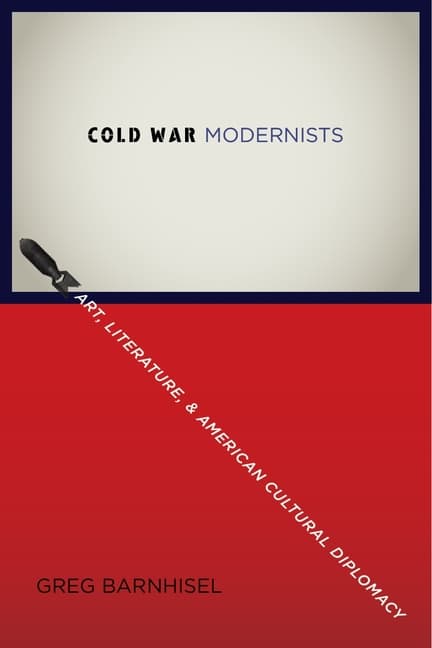
Cold War Modernists: Art, Literature, and American Cultural Diplomacy
by Greg Barnhisel
Rent This Book
Returns in 60 days
Please Note: Rental books are typically used and do not come with any unused access code cards.
Free returns on all rentals
Product Details
About This Book
European intellectuals of the 1950s dismissed American culture as nothing more than cowboy movies and the A-bomb. In response, American cultural diplomats tried to show that the United States had something to offer beyond military might and commercial exploitation. Through literary magazines, traveling art exhibits, touring musical shows, radio programs, book translations, and conferences, they deployed the revolutionary aesthetics of modernism to prove--particularly to the leftists whose Cold War loyalties they hoped to secure--that American art and literature were aesthetically rich and culturally significant.
Yet by repurposing modernism, American diplomats and cultural authorities turned the avant-garde into the establishment. They remade the once revolutionary movement into a content-free collection of artistic techniques and styles suitable for middlebrow consumption. Cold War Modernists documents how the CIA, the State Department, and private cultural diplomats transformed modernist art and literature into pro-Western propaganda during the first decade of the Cold War. Drawing on interviews, previously unknown archival materials, and the stories of such figures and institutions as William Faulkner, Stephen Spender, Irving Kristol, James Laughlin, and Voice of America, Barnhisel reveals how the U.S. government reconfigured modernism as a trans-Atlantic movement, a joint endeavor between American and European artists, with profound implications for the art that followed and for the character of American identity.