
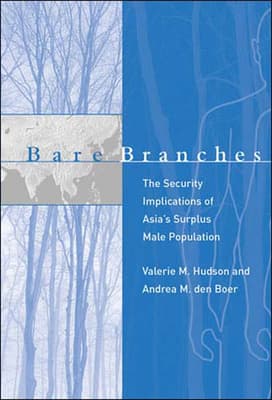
Bare Branches: The Security Implications of Asia's Surplus Male Population
by Hudson, Valerie M., Den Boer, Andrea M.
Rent This Book
Returns in 60 days
Please Note: Rental books are typically used and do not come with any unused access code cards.
Free returns on all rentals
Product Details
About This Book
Hudson and den Boer suggest that the sex ratios of many Asian countries, particularly China and India--which represent almost 40 percent of the world's population--are being skewed in favor of males on a scale that may be unprecedented in human history. Through offspring sex selection (often in the form of sex-selective abortion and female infanticide), these countries are acquiring a disproportionate number of low-status young adult males, called "bare branches" by the Chinese.
Hudson and den Boer argue that this surplus male population in Asia's largest countries threatens domestic stability and international security. The prospects for peace and democracy are dimmed by the growth of bare branches in China and India, and, they maintain, the sex ratios of these countries will have global implications in the twenty-first century.