
ISBN-13: 9780313362163
Hardcover
224 Pages
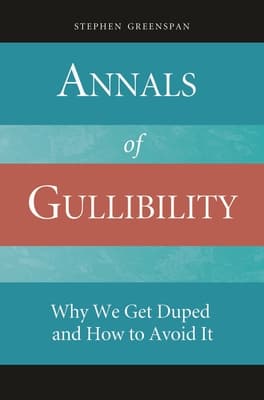
Annals of Gullibility: Why We Get Duped and How to Avoid It
by Greenspan, Stephen
Rent This Book
Returns in 60 days
$26.00/ 60 days
Please Note: Rental books are typically used and do not come with any unused access code cards.
Free returns on all rentals
Product Details
ISBN-139780313362163
ISBN-100313362165
PublisherPraeger
Published12-2008
Edition1st
LanguageEnglish
FormatHardcover
Pages224
About This Book
The first book to provide a comprehensive look at the problem of gullibility, this groundbreaking work covers how and why we are fooled in areas that range from religion, politics, science, and medicine, to personal finance and relationships. First laying the groundwork by showing gullibility at play in the writings of historic authors we all know, developmental psychologist Stephen Greenspan follows with chapters that describe social duping across the gamut of human conduct. From people who pour bucks into investment scams, to those who follow the faith of scientologists, believe in fortunetellers, or champion unfounded medicine akin to snake oil, we all know someone who has been duped. A lot of us have been duped ourselves, out of naive trust. It$$$apos$$$s not a matter of low intelligence that moves us to, without evidence, believe the words of politicians, salesmen, academics, lawyers, military figures, or cult leaders, among others. Greenspan shows us the four broad reasons we become drawn into gullible behavior, and he presents ways people can become less gullible.
Greenspan takes us into the vast realm of gullibility from the fictional Pied Piper to the historical Trojan Horse, then through modern-day military maneuvers, political untruths, police and criminal justice scams, and financial and love lies. While there have been earlier books focused on liars and manipulators of all sorts, this is the first to focus on the gullible who are their victims, and how the gullible can become less likely to be taken again.
Greenspan takes us into the vast realm of gullibility from the fictional Pied Piper to the historical Trojan Horse, then through modern-day military maneuvers, political untruths, police and criminal justice scams, and financial and love lies. While there have been earlier books focused on liars and manipulators of all sorts, this is the first to focus on the gullible who are their victims, and how the gullible can become less likely to be taken again.