
ISBN-13: 9780367016838
Hardcover
742 Pages
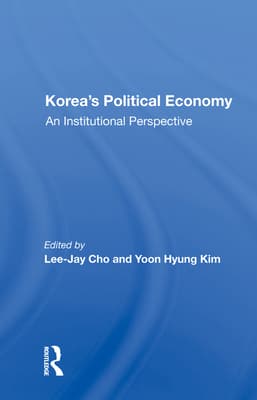
Korea's Political Economy: An Institutional Perspective
by Cho, Lee-Jay
Rent This Book
Returns in 60 days
$133.74/ 60 days
Please Note: Rental books are typically used and do not come with any unused access code cards.
Free returns on all rentals
Product Details
ISBN-139780367016838
ISBN-100367016834
PublisherRoutledge
Published06-2019
Edition1st
LanguageEnglish
FormatHardcover
Pages742
About This Book
Over the past three decades, South Korea has moved along a path of strong economic growth and political democratization, attracting worldwide attention and providing valuable lessons for other developing economies. Yet Korea still must grapple with many intractable problems fueled by its rapid industrialization and uneven growth, including unbalanced distribution of wealth, concentrated economic power, and adversarial relationships between management and labor. Within the context of these sweeping changes, this volume explores options for economic and social institutional reform in Korea. Drawing on models of economic development from Japan, the United States, and Europe, a distinguished group of Asian and Western scholars relates the experiences of previously industrialized economies to each facet of Koreas economic system, including national management; taxation and banking; land ownership and use; trade and industrial strategy; and relations among business ownership, management, and labor. In so doing, the contributors provide valuable insights and fresh proposals for a viable model of social and economic modernization. Throughout the volume, the contributors emphasize the importance of Koreas cultural heritage--not only in explaining the nations recent growth but also as a key element of its continued success. By providing an overview of the evolution and interaction of Korean economic, political, and sociocultural institutions, the contributors make clear how these structures mediate the movement between cultural values and economic progress.