
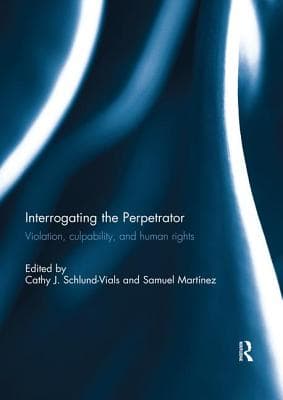
Interrogating the Perpetrator: Violation, Culpability, and Human Rights
by Schlund-Vials, Cathy J., Mart�nez, Samuel
Rent This Book
Returns in 60 days
Please Note: Rental books are typically used and do not come with any unused access code cards.
Free returns on all rentals
Product Details
About This Book
Set adjacent to "victims" and "bystanders," "perpetrators" are by no means marginalized figures in human rights scholarship. Nevertheless, the extent to which the perpetrator is not only socially imagined but also sociologically constructed remains a central concern in studies of state-authorized mass violence. This interdisciplinary collection of essays builds upon such work by strategically interrogating the terms through which such a figure is read via law, society, and culture. Of particular concern to the contributors to this volume are the ways in which notions of "violation" and "culpability" are mediated through less direct, convoluted frames of corporatization, globalization, militarized humanitarianism, post-conflict truth and justice processes, and postcoloniality. The chapters variously give scrutiny to historical memory (who can voice it, when and in what registers), question legalism's dominance within human rights, and analyse the story-telling values invested in the figure of the perpetrator.
Against the common tendency to view perpetrators as either monsters or puppets - driven by evil or controlled by others - the chapters in this book are united by the themes of truth's contingency and complex imaginings of perpetrators. Even as the truth that emerges from perpetrator testimony may depend on who is listening, with what attitude and in what institutional context, the book's chapters also affirm that listening to perpetrators may be every bit as productive of human rights insights as it has been to listen to survivors and witnesses. This book was previously published as a special issue of the International Journal of Human Rights.