
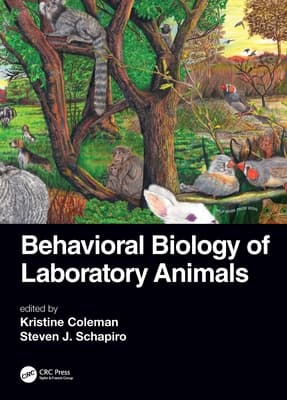
Behavioral Biology of Laboratory Animals
by Coleman, Kristine, Schapiro, Steven J.
Rent This Book
Returns in 60 days
Please Note: Rental books are typically used and do not come with any unused access code cards.
Free returns on all rentals
Product Details
About This Book
CHOICE Highly Recommended title, 2022!
This 30-chapter volume informs students and professionals about the behavioral biology of animals commonly housed in laboratory and other captive settings. Each species evolved under specific environmental conditions, resulting in unique behavioral patterns, many of which are maintained in captivity even after generations of breeding. Understanding natural behavior is therefore a critical part of modern animal care practices. The descriptions, data, guidance, resources, and recommendations in this book will help the reader understand their animals better, refine the care and treatment that they receive, and improve the well-being, welfare, and wellness of their animals.
The book is divided into three sections, all focusing on aspects of the behavioral biology of animals found in laboratories and related research settings. After five introductory chapters, 25 chapters are dedicated to specific taxonomic groups (including mice, zebrafish, zebra finches, reptiles, macaques) while a concluding section of ethograms provides a centralized resource for those interested in understanding, and potentially quantifying, animal behavior.
The Behavioral Biology of Laboratory Animals will provide anyone working in maintenance, care, and/or research programs that involve laboratory animals with information about the way the animals live in the wild, and the way that they should live in captive research settings. Many of the guidelines and recommendations will also be valuable to those managing and working with animals in other environments, including zoological parks, aquaria, and sanctuaries.