
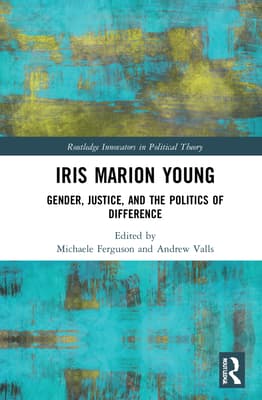
Iris Marion Young: Gender, Justice, and the Politics of Difference
by Ferguson, Michaele, Valls, Andrew
Rent This Book
Returns in 60 days
Please Note: Rental books are typically used and do not come with any unused access code cards.
Free returns on all rentals
Product Details
About This Book
Iris Marion Young (1949-2006) was one of the most influential and innovative political theorists of her generation who had a significant impact on a wide range of topics such as democratic theory, feminist theory, and justice. She bridged many longstanding divides among political theorists, engaging in Continental and critical theory, but also insisting on the importance of normative argument: her corpus stands as a testament to the fruitfulness of engaging in both abstract theory and the 'real world' of everyday politics. This volume spans the several decades of her work, illustrating her intellectual development over time through three major areas of innovation:
- Gender: Maintaining that gender is both conceptually and politically meaningful, Young theorized gender in terms of structures that, in combination, position different people we call "women" in different ways, such that some women have some structures in common, without all women sharing all gendered structures in common.
- Justice: Young's early writings on a critical theory of justice evolved in her later and posthumously published works where she developed an account of justice that brought together her theorization of structure with her concern to respond to contemporary claims of injustice.
- The Politics of Difference: Young rejected universal and abstract theories of justice and maintained that justice instead required attending to the experiences of people marked by difference.
This volume will prove useful to scholars and students working in the fields of critical and political theory, feminist theory, international law and public diplomacy.