
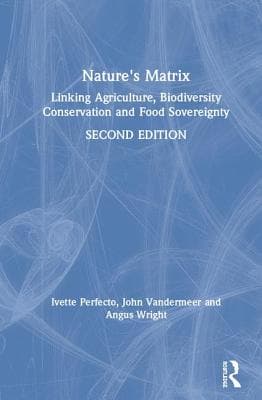
Nature's Matrix: Linking Agriculture, Biodiversity Conservation and Food Sovereignty
by Perfecto, Ivette, VanderMeer, John, Wright, Angus
Rent This Book
Returns in 60 days
Please Note: Rental books are typically used and do not come with any unused access code cards.
Free returns on all rentals
Product Details
About This Book
When first published in 2009, Nature's Matrix set out a radical new approach to the conservation of biodiversity. This new edition pushes the frontier of the biodiversity/agriculture debate further, making an even stronger case for the need to transform agriculture and support small- and medium-scale agroecology and food sovereignty.
In the first edition, the authors set out a radical new approach to the conservation of biodiversity. This is based on the concept of a landscape as a matrix of diverse, small-scale agricultural ecosystems, providing opportunities to enhance conservation under the stewardship of local farmers. This contrasts with the alternative view of industrial-scale farms and large protected areas which exclude local people. However, since then the debate around conservation and agriculture has developed significantly and this is reflected in this updated second edition. The text is thoroughly revised, including:
- a reorganization of chapters with new and timely topics introduced,
- updates to the discussion of agroecology and food sovereignty, bringing it in line with the current debates,
- greater coverage of the role of agroecology, in particular agroforestry, as an important component of climate change adaptation and mitigation, highlighting recent studies on the role of intensive agriculture in climate change and loss of biodiversity, and
- more attention given to the discussion of land sparing versus land sharing.
By integrating the ecological aspects of agriculture and conservation biology, with a political and social analysis as well as historical perspective, the book continues to set a progressive agenda and appeals to a wide range of students and professionals.