
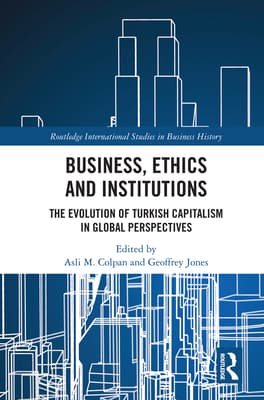
Business, Ethics and Institutions: The Evolution of Turkish Capitalism in Global Perspectives
by Colpan, Asli M., Jones, Geoffrey
Rent This Book
Returns in 60 days
Please Note: Rental books are typically used and do not come with any unused access code cards.
Free returns on all rentals
Product Details
About This Book
Business, Ethics and Institutions aims to strengthen scholarly and policy understanding of Turkish capitalism and the diversified business groups which dominate the economy by providing a deep analysis of the evolution of political and social institutions which shaped corporate activity. It demonstrates the key role played by large family-owned business groups in Turkey's development. It also seeks to identify both the similarities and the differences in the Turkish pattern of economic development, making comparisons with Japan, an early example of catch-up, and a more successful model than Turkey. The comparative perspective makes the book highly relevant to a wide range of scholars interested in the institutional foundations of modern capitalism and will be of value to researchers, academics, and students in the fields of business and economic history, ethics, organizational studies, and entrepreneurship.