
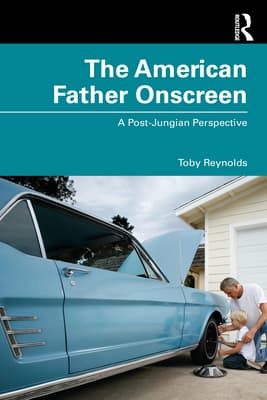
The American Father Onscreen: A Post-Jungian Perspective
by Reynolds, Toby
Rent This Book
Returns in 60 days
Please Note: Rental books are typically used and do not come with any unused access code cards.
Free returns on all rentals
Product Details
About This Book
The American father is constantly depicted by contemporary Hollywood as being under pressure and forever struggling, but why? By utilising an analytical psychological approach, this fascinating book reveals the depths, complexities and nuances of the depictions of the American father and his struggles with contemporary contextual challenges and offers a fresh and intellectually exciting set of perspectives and interpretations of this key masculine figure and his effect on cinematic masculinities.
Using a post-Jungian methodology and close textual analysis, the book seeks to explore the presence and impact of the American filmic father, and the effect his Shadow has on himself, his children and US society. It does this by examining the concept of 'father hunger', a term popularised by the mytho-poetic men's movement that holds fathers to be an essential link to the masculine continuum and masculinity in general. Analysing the role that Hollywood plays in depicting fathers and their relationships with their children and American society, The American Father Onscreen concludes that Hollywood presents the American paternal as crucial to the construction of US society and, consequently, American cultural myths, such as the American Dream.
Providing an alternative perspective into the fascinating, complex, and under-researched figure of the American father, this book will be of great interest to academics and students of film, gender studies, American studies, and post-Jungian psychology.