
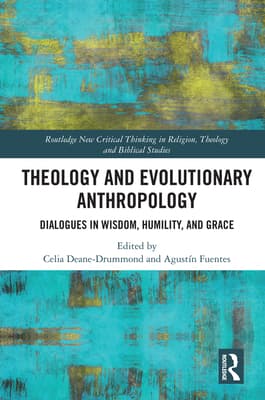
Theology and Evolutionary Anthropology: Dialogues in Wisdom, Humility and Grace
by Deane-Drummond, Celia, Fuentes, Agust�n
Rent This Book
Returns in 60 days
Please Note: Rental books are typically used and do not come with any unused access code cards.
Free returns on all rentals
Product Details
About This Book
This book sets out some of the latest scientific findings around the evolutionary development of religion and faith and then explores their theological implications. This unique combination of perspectives raises fascinating questions about the characteristics that are considered integral for a flourishing social and religious life and allows us to start to ask where in the evolutionary record they first show up in a distinctly human manner.
The book builds a case for connecting theology and evolutionary anthropology using both historical and contemporary sources of knowledge to try and understand the origins of wisdom, humility, and grace in 'deep time'. In the section on wisdom, the book examines the origins of complex decision-making in humans through the archaeological record, recent discoveries in evolutionary anthropology, and the philosophical richness of semiotics. The book then moves to an exploration of the origin of characteristics integral to the social life of small-scale communities, which then points in an indirect way to the disposition of humility. Finally, it investigates the theological dimensions of grace and considers how artefacts left behind in the material record by our human ancestors, and the perspective they reflect, might inform contemporary concepts of grace.
This is a cutting-edge volume that refuses to commit the errors of either too easy a synthesis or too facile a separation between science and religion. As such, it will be of interest to scholars of religious studies and theology - especially those who interact with scientific fields - as well as academics working in anthropology of religion.