
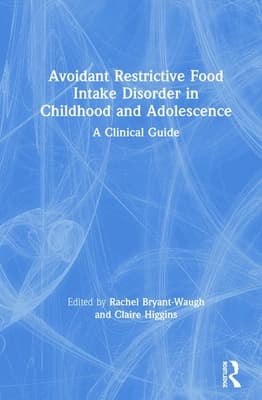
Avoidant Restrictive Food Intake Disorder in Childhood and Adolescence: A Clinical Guide
by Bryant-Waugh, Rachel, Higgins, Claire
Rent This Book
Returns in 60 days
Please Note: Rental books are typically used and do not come with any unused access code cards.
Free returns on all rentals
Product Details
About This Book
Avoidant Restrictive Food Intake Disorder, more commonly known as ARFID, is a relatively newly introduced diagnostic category. Research in the field, although growing, remains limited, with clinical knowledge and expertise varying across clinicians. There may be uncertainty how to correctly identify and diagnose the disorder as well as how best to direct treatment.
This clinical guide sets out to be a trailblazer in the field, providing up-to-date information and comprehensive clinical guidance on ARFID in childhood and adolescence. Chapters in the book are divided into five sections, the first focussing on the importance of attending to the perspectives of those directly affected by ARFID. Three subsequent sections cover diagnosis and presentation, including chapters on aetiology, epidemiology, assessment, and outcome measures; clinical assessment, including psychological, family, nutritional, medical, and sensory components; and management, discussing nutritional, medical, psychological, and wider system approaches. The final section discusses prognosis and outcomes, and considers future research directions.
This clinically focussed book, with contributions from a multi-disciplinary authorship, is intended to function as an accessible, practical guide, and reference resource. It includes summaries of available evidence, with related recommendations for clinical practice. The advice and suggestions included will assist clinicians in targeting their attention appropriately, to ensure that children, adolescents, and their families receive the best possible care.