
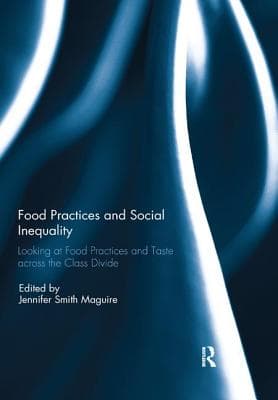
Food Practices and Social Inequality: Looking at Food Practices and Taste across the Class Divide
by Smith Maguire, Jennifer
Rent This Book
Returns in 60 days
Please Note: Rental books are typically used and do not come with any unused access code cards.
Free returns on all rentals
Product Details
About This Book
Policy-related, academic and populist accounts of the relationship between food and class tend to reproduce a dichotomy that privileges either middle-class discerning taste or working-class necessity. Taking a markedly different approach, this collection explores the classed cultures of food practices across the spectrum of social stratification. Eschewing assumptions about the tastes (or lack thereof) of low-income consumers, the authors call attention to the diverse, complex forms of critical creativity and cultural capital employed by individuals, families and communities in their attempts to acquire and prepare food that is both healthy and desirable. The collection includes research carried out in the United States, Canada, Mexico and Denmark, and covers diverse contexts, from the intense insecurity of food deserts to the relative security of social democratic states. Through quantitative and qualitative cross-class comparisons, and ethnographic accounts of low-income experiences and practices, the authors examine the ways in which food practices and preferences are inflected by social class (alone, and in combination with gender, ethnicity and urban/rural location). The collection underlines the simultaneous need for the development of a more nuanced, dynamic account of the tastes and cultural competences of socially disadvantaged groups, and for structural critiques of the gross inequalities in the degrees of freedom with which different individuals and groups engage in food practices. This book was originally published as a special issue of Food, Culture & Society.