
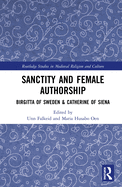
Sanctity and Female Authorship: Birgitta of Sweden & Catherine of Siena
by Maria H Oen (Editor), Unn Falkeid (Editor)
Rent This Book
Returns in 60 days
Please Note: Rental books are typically used and do not come with any unused access code cards.
Free returns on all rentals
Product Details
About This Book
Birgitta of Sweden (Birgitta Birgersdotter, 1302/03-1373) and her younger contemporary Catherine of Siena (Caterina Benincasa, 1347-1380) form the most powerful and influential female duo in European history. Both enjoyed saintly reputations in life, while acting as the charismatic leaders of a considerable group of followers consisting of clergy as well as mighty secular men and women. They are also among the very few women of the Trecento to leave a substantial body of written work which was widely disseminated in their original languages and in translations. Copies of Birgitta's Liber celestis revelacionum (The Heavenly Book of Revelations) and compilations of Catherine's letters (Le lettere), prayers Le orazioni) and her theological work, Il Dialogo della divina Provvidenza (The Dialogue) found their way into monastic, royal, and humanist libraries all over Europe. After their deaths, Birgitta's and Catherine's respective groups of supporters sought to have them formally canonized. In both cases, however, their political and theological outspokenness, orally and in text, and their public authority represented obstacles.
In this comparative study, leading scholars from different disciplinary backgrounds offer, for the very first time, a comprehensive exploration of the lives and activities of Birgitta and Catherine in tandem. Particular attention is given to their literary works and the complex process of negotiating their sanctity and authorial roles. Above all, what the chapters reveal is the many points of connections between two of the most influential women of the Trecento, and how they were related to one another by their peers and successors.