
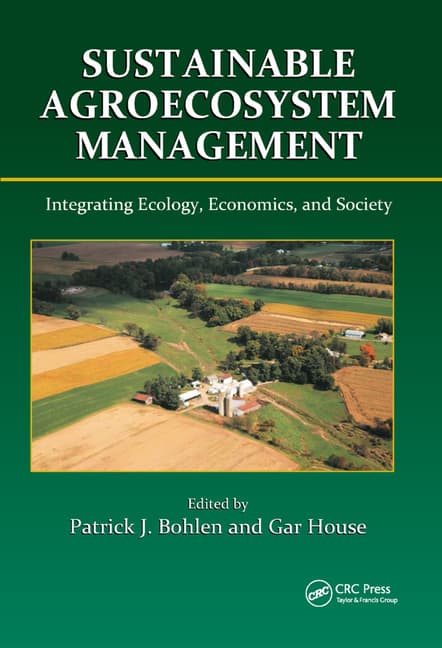
Sustainable Agroecosystem Management: Integrating Ecology, Economics, and Society
by Patrick J Bohlen (Editor), Gar House (Editor)
Rent This Book
Returns in 60 days
Please Note: Rental books are typically used and do not come with any unused access code cards.
Free returns on all rentals
Product Details
About This Book
Emphasizes Centrality of the Ecosystem Perspective
Sustainable management of agroecosystems in the 21st century faces unprecedented challenges. Protecting the environment while feeding a burgeoning population that could reach nine billion by mid-century, preserving the world's biodiversity, and sustaining agriculture in an increasingly urban world is a massive undertaking.
Avoiding simple prescriptions for the application of ecological principles to agriculture, Sustainable Agroecosystem Management: Integrating Ecology, Economics, and Society emphasizes the continued centrality of the ecosystem perspective, and the need to integrate ecological, economic, and social considerations in agroecosystem science and management.
Truly Interdisciplinary in Scope
With contributions from distinguished leaders in the field of sustainable agriculture, this authoritative book first delineates the present and future challenges agroecosystems face. It then reviews the important contributions made by Dr. Ben Stinner, a pioneer in the field of agroecosystem ecology. Providing historical background of attempts to connect the ecological and agricultural sciences, this standard-setting resource highlights recent efforts to integrate natural and social science perspectives. It also examines the challenges for developing integrated approaches to agroecosystem management.
Through a variety of case studies with global applications, the text makes it abundantly clear that purely technological approaches are insufficient for solving the food systems problems of the future. It explores practical innovative strategies, policies, and research needs necessary to develop management approaches that emphasize whole system productivity, diversify agricultural operations, and sustain multiple functions, including ecological integrity.