
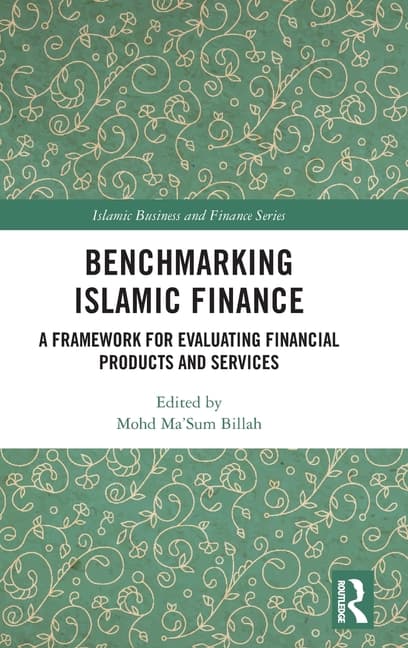
Benchmarking Islamic Finance: A Framework for Evaluating Financial Products and Services
by Mohd Ma'sum Billah (Editor)
Rent This Book
Returns in 60 days
Please Note: Rental books are typically used and do not come with any unused access code cards.
Free returns on all rentals
Product Details
About This Book
Pricing or benchmarking is a process of evaluating the performance of a financial company's products and services or systems, against other businesses, considered to be at the top of their field, by applying a measurement of "best in performance."
This book includes contributions from the leading global experts in the field who tackle topics such as whether the Islamic financial system has been dependent on the LIBOR / EURIBOR in its benchmarking exercises to date, and thus, whether it will be affected negatively by the predicted non-existence of the LIBOR / EURIBOR from 2021 onwards. They also address the question of whether the Islamic financial system requires benchmarking of its products and services and consider the emergence of Sharī ͑ah-justified benchmarking in today's Islamic financial system. Additionally, they look at how benchmarking formulas should be adapted to ensure the satisfaction of customers within the principles of Maqasid al-Sharī ͑ah.
It takes a legal and institutional approach to the subject, which readers will find particularly valuable, as there are various forms of Islamic finance institutions that do not conform to established models in the finance industry. Furthermore, there are emerging business models that will benefit from this line of investigation.
This book offers a timely analysis of these issues and redresses the existing misconceptions and misinterpretations pertaining to benchmarking, in an Islamic finance context, and, as such, provides guidance and strategies for future directions. It will appeal to researchers of Islamic banking, finance, and insurance, as well as, practitioners, particularly standard setting bodies, regulators, and policy makers.