
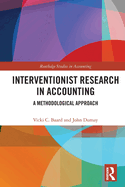
Interventionist Research in Accounting: A Methodological Approach
by Vicki Baard, John Dumay
Rent This Book
Returns in 60 days
Please Note: Rental books are typically used and do not come with any unused access code cards.
Free returns on all rentals
Product Details
About This Book
This book is the first comprehensive methodological guide for accounting researchers on Interventionist Research (IVR). It provides all the fundamental components needed for understanding what IVR is, and how to plan, design, and conduct legitimate intervention studies, which can endure the scrutiny of institutions and peer review. This text systematically opens the 'black box' of an alternative research paradigm seeking to contribute simultaneously to theory and practice, through direct and collaborative engagement with organisations, practitioners, managers and professionals. It mobilises the production of innovative and theoretically grounded research for academe, and of practical relevance or usefulness and interest to the field of practice.
Interventionist Research in Accounting: A Methodological Approach unpacks current thinking on IVR to forge a confident path ahead for IVR through adopting a forward-thinking approach. This book recognises the remedial potential of IVR to address the research-practice-relevance gap in accounting research and deliberates the challenges of IVR in accounting. It addresses the design, development, and implementation of interventions, critical to solving real-world problems as well as guiding readers in planning the IVR project including budgetary and ethical aspects, utilising suitable research methods and data collection techniques, and establishing validity and reliability. Further, it offers guidance on selecting and managing the research team and recruiting, accessing, and retaining intervention participants; these two components are crucial to creating collaborative relationships required for effective intervention.
This book is a guide serving as a valuable resource for accounting researchers conducting intervention studies, for doctoral and other research students undertaking accounting research, and academics working in universities and business schools or teaching courses in accounting and research methodology.