
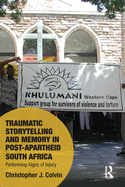
Traumatic Storytelling and Memory in Post-Apartheid South Africa: Performing Signs of Injury
by Christopher J Colvin
Rent This Book
Returns in 60 days
Please Note: Rental books are typically used and do not come with any unused access code cards.
Free returns on all rentals
Product Details
About This Book
This book explores the practice of traumatic storytelling that emerged out of the South African Truth and Reconciliation Commission and came to play a key role in the lives of the members of the Khulumani Support Group for victims of apartheid-era political violence. Group members found traumatic storytelling both frustrating and yet also an important form of memory work that shaped how they saw themselves in the post-apartheid era. Drawing on ethnographic fieldwork, the author examines how traumatic storytelling functioned not only as a kind of psychological healing and national political theatre, but also as a potent form of social relation, economic exchange, political activism, and expressive practice. With emphasis on the personal, social, and political significance of the act of traumatic storytelling, this volume asks why members of Khulumani, despite their many disappointments, continued to engage intensively in storying their experiences for themselves and others. Examining what powers storytelling held for both group members and their witnesses, and considering the ways in which storytelling enabled new senses of self and new understandings of what was possible in the years after the end of apartheid, this book considers what we might learn more broadly from the experiences of Khulumani about the possibilities--and limits--of traumatic-memory-making as an instrument of personal, social, and political repair. As such, it will appeal to scholars of sociology, anthropology, and criminology with interest in justice and post-conflict societies.