
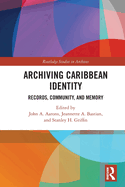
Archiving Caribbean Identity: Records, Community, and Memory
by John Aarons (Editor), Jeannette A Bastian (Editor), Stanley Hazley Griffin (Editor)
Rent This Book
Returns in 60 days
Please Note: Rental books are typically used and do not come with any unused access code cards.
Free returns on all rentals
Product Details
About This Book
Archiving Caribbean Identity highlights the "Caribbeanization" of archives in the region, considering what those archives could include in the future and exploring the potential for new records in new formats.
Interpreting records in the broadest sense, the 15 chapters in this volume explore a wide variety of records that represent new archival interpretations. The book is split into two parts, with the first part focusing on record forms that are not generally considered "archival" in traditional Western practice. The second part explores more "traditional" archival collections and demonstrates how these collections are analysed and presented from the perspective of Caribbean peoples. As a whole, the volume suggests how colonial records can be repurposed to surface Caribbean narratives. Reflecting on the unique challenges faced by developing countries as they approach their archives, the volume considers how to identify and archive records in the forms and formats that reflect the postcolonial and decolonized Caribbean, how to build an archive of the people that documents contemporary society and reflects Caribbean memory, and how to repurpose the colonial archives so that they assist the Caribbean in reclaiming its history.
Archiving Caribbean Identity demonstrates how non-textual cultural traces function as archival records and how folk-centred perspectives disrupt conventional understandings of records. The book should thus be of interest to academics and students engaged in the study of archives, memory, culture, history, sociology, and the colonial and postcolonial experience.