
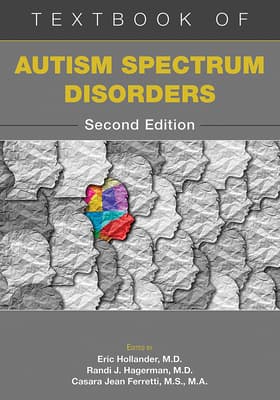
ISBN-13: 9781615373048
Hardcover
742 Pages
Textbook of Autism Spectrum Disorders
by Hollander, Eric, Hagerman, Randi J., Ferretti, Casara
Availability Unavailable
This book is not currently available for rent or purchase.
Product Details
ISBN-139781615373048
ISBN-101615373047
PublisherAmerican Psychiatric Association Publishing
Published03-2022
Edition2
LanguageEnglish
FormatHardcover
Pages742
About This Book
More than 40 years after the official recognition of infantile autism in DSM-III, numerous questions remain about autism spectrum disorder (ASD)―its possible causes, assessment, and most effective treatments. This second edition of the Textbook of Autism Spectrum Disorders features contributions from dozens of experts as it reviews the latest research on these topics and more. As ambitious in scope and exhaustive as the preceding edition, this guide is organized by sections that tackle: • Assessment and evaluation, including recognizing the lower- and higher-order repetitive behaviors characteristic of ASD, as well as its comorbidities. Chapters also discuss the roles that racial and ethnic disparities, gender and sexual identities,and biomarkers and technology―including smart home devices and augmented reality technology―can play in assessment and evaluation. • The possible causes of autism, from prenatal, perinatal, and parental risk factors to syndromic causes of ASD, updates on genetic testing, and the effect of environmental factors and immune dysregulation. • Standard and experimental treatments in autism. Chapters analyze the role of pharmacotherapies such as serotonergic antidepressants, atypical antipsychotics, and experimental therapeutics (e.g., oxytocin, vasopressin) as well as the use of cannabis, cannabinoids, and immunomodulatory agents. The book also examines behavioral treatments, interventions in schools, complementary and integrative medicine approaches, stem cell and gene therapies, and more. • Social policy issues, including the role of patient advocacy groups in treatment development and an examination of autism strengths and the growing emphasis on recognizing neurodiversity. Unrivaled in its thoroughness, the book includes summary points in each chapter for ease of reference and lists of recommended readings that offer readers the opportunity for further study and exploration. For all those in the ASD continuum of care―psychiatrists, psychologists, neurologists, social workers, speech therapists, educators, and patient families―this is an essential resource.