
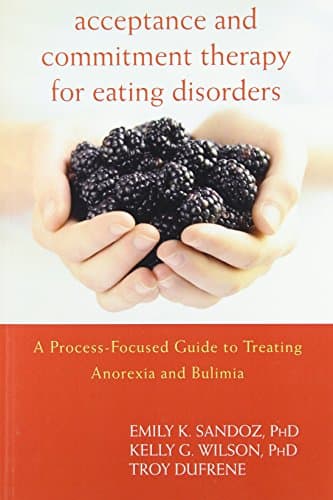
HomeLibraryAcceptance and Commitment Therapy for Eating Disorders: A Process-Focused Guide to Treating Anorexia and Bulimia
ISBN-13: 9781626253964
Paperback
312 Pages
Acceptance and Commitment Therapy for Eating Disorders: A Process-Focused Guide to Treating Anorexia and Bulimia
by Emily K. Sandoz PhD,Kelly G. Wilson PhD,Troy DuFrene
Availability Unavailable
This book is not currently available for rent or purchase.
Product Details
ISBN-139781626253964
ISBN-10162625396X
PublisherNew Harbinger Publications
Published2011-02-03
Edition1
LanguageEnglish
FormatPaperback
Pages312
About This Book
A Process-Focused Guide to Treating Eating Disorders with ACT
At some point in clinical practice, most therapists will encounter a client suffering with an eating disorder, but many are uncertain of how to treat these issues. Because eating disorders are rooted in secrecy and reinforced by our culture's dangerous obsession with thinness, sufferers are likely to experience significant health complications before they receive the help they need. Acceptance and Commitment Therapy for Eating Disorders presents a thorough conceptual foundation along with a complete protocol therapists can use to target the rigidity and perfectionism at the core of most eating disorders. Using this protocol, therapists can help clients overcome anorexia, bulimia, binge eating disorder, and other types of disordered eating.
This professional guide offers a review of acceptance and commitment therapy (ACT) as a theoretical orientation and presents case conceptualizations that illuminate the ACT process. Then, it provides session-by-session guidance for training and tracking present-moment focus, cognitive defusion, experiential acceptance, transcendent self-awareness, chosen values, and committed action-the six behavioral components that underlie ACT and allow clients to radically change their relationship to food and to their bodies. Both clinicians who already use ACT in their practices and those who have no prior familiarity with this revolutionary approach will find this resource essential to the effective assessment and treatment of all types of eating disorders.