
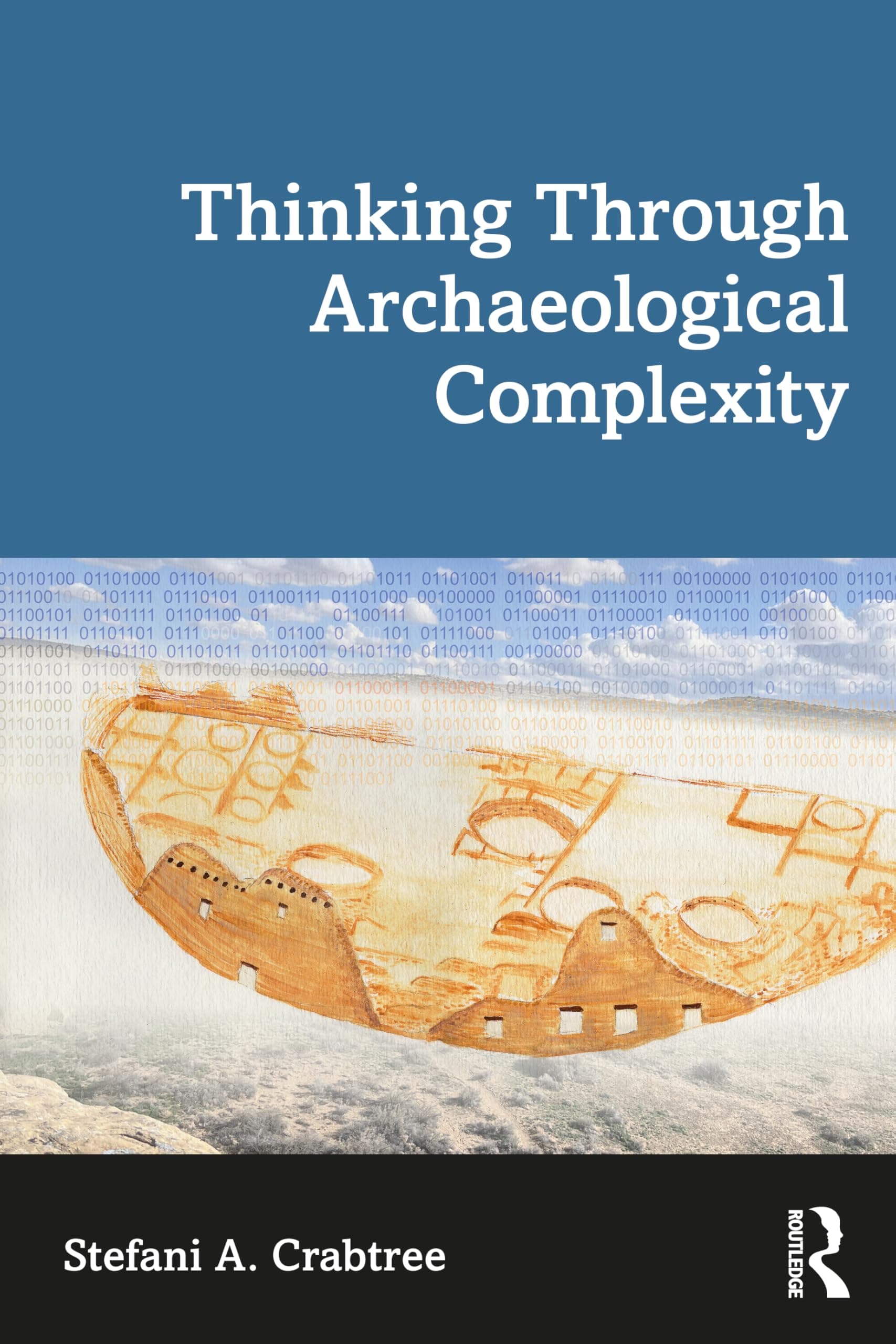
Thinking Through Archaeological Complexity
by Crabtree, Stefani A.
Availability Unavailable
This book is not currently available for rent or purchase.
Product Details
About This Book
Thinking Through Archaeological Complexity explores how archaeologists can engage with complex adaptive systems, examining dynamic interactions between humans and environments across space and through time. It offers a roadmap for integrating theory, method, and data through a complexity science lens.
This volume bridges archaeology and complexity science, offering a transdisciplinary framework for understanding long-term socio-ecological dynamics. This book provides a substantive overview of how complex adaptive systems science is used in archaeology. Drawing from case studies in the Ancestral Pueblo Southwest, it demonstrates how tools like agent-based modeling, ecological and social network analysis, and settlement scaling reveal emergent patterns in the archaeological record. The book critically examines concepts such as resilience, adaptation, innovation, and transformation, offering alternatives to overly linear narratives. Emphasizing methodological transparency, it provides practical guidance for scholars interested in modeling, data integration, and working across disciplinary boundaries while grounding in theoretical pluralism. By situating archaeological knowledge within broader scientific conversations, the book encourages readers to reimagine the past not as static or collapsed, but as complex, entangled, and instructive for contemporary challenges.
This book is essential reading for students, researchers, and practitioners in archaeology as well as complexity science. It will also appeal to scholars in anthropology, environmental studies, geography, and network science interested in long-term human-environmental dynamics and the application of complex systems approaches in historical contexts.