
HomeLibraryIt's Still Debatable: Using Socioscientific Issues to Develop Scientific Literacy, K 5 - PB347X2
ISBN-13: 9781681406299
Paperback
525 Pages
It's Still Debatable: Using Socioscientific Issues to Develop Scientific Literacy, K 5 - PB347X2
by Ronald N. Giere, John Bickle, Robert Mauldin, Jerusha Richardson B.Sc., Carl T. Bergstrom, Jevin D. West, Brian Greene, David Koepsell, Abhijit V. Banerjee, Esther Duflo, Dr. Steven Novella, Bob Novella, Cara Santa Maria, Jay Novella, Evan Bernstein, Christopher Lee Bolt, Sami Kahn
Availability Unavailable
This book is not currently available for rent or purchase.
Product Details
ISBN-139781681406299
ISBN-101681406292
PublisherNational Science Teachers Association - NSTA Press
Published2019-09-30
Edition1
LanguageEnglish
FormatPaperback
Pages525
About This Book
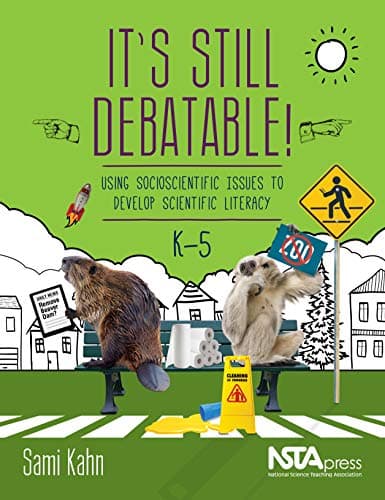
It’s Still Debatable! encourages scientific literacy by showing you how to teach the content and thinking skills K–5 students need to explore real-world questions like these: • Is football too dangerous for kids? • Do we need zoos? • Should distracted walking be illegal? At the core of the exploration is the Socioscientific Issues Framework. It uses debatable, science-related societal questions, or socioscientific issues, to address science content, help children learn to apply the content, and encourage them to become informed citizens. The book supports the Next Generation Science Standards; links to the Common Core State Standards, National Curriculum Standards for Social Studies, and C3 Framework; and is developmentally appropriate for diverse elementary classrooms. It also includes a chapter especially for use in methods courses and professional development programs. The framework gives students practice in the research, analysis, and argumentation necessary to grapple with difficult questions with roots in life, physical, Earth, and environmental science. After introducing the framework and explaining how it supports the standards, the book shows you how to implement the concept through 14 lessons. Because the book is specifically for elementary grades, the author made it a teach-ready resource that integrates science into your packed school days. You get clear and accessible background information, practical guidance on how to use the lessons, and developmentally appropriate assessments and handouts. You even find out how to develop your own socioscientific issues curriculum.