
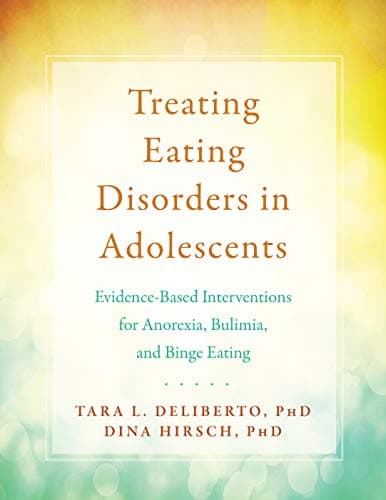
HomeLibraryTreating Eating Disorders in Adolescents: Evidence-Based Interventions for Anorexia, Bulimia, and Binge Eating
ISBN-13: 9781684032235
Paperback
328 Pages
Treating Eating Disorders in Adolescents: Evidence-Based Interventions for Anorexia, Bulimia, and Binge Eating
by Gerald Monk, John Winslade, Kathie Crocket, David Epston, Terri M. Skirven OTR/L CHT, A. Lee Osterman MD, Jane Fedorczyk PT PhD CHT ATC, Peter C. Amadio MD, Sheri Felder, Eon K Shin, Lisa P. Masteralexis, Carol A. Barr, Mary Hums, Kenneth A. Olson PT DHSc OCS FAAOMPT, Suzanne Midori Hanna, Sarah Pritchard, Matthew T Brown, Daniel Rascher, Mark S Nagel, Rob Aspell, Michele Baldwin, Tara L. Deliberto PhD, Dina Hirsch PhD
Availability Unavailable
This book is not currently available for rent or purchase.
Product Details
ISBN-139781684032235
ISBN-101684032237
PublisherContext Press
Published2019-08-01
Edition1
LanguageEnglish
FormatPaperback
Pages328
About This Book
Two leading experts in eating disorders offer a comprehensive, evidence-based, and fully customizable program, Integrative Modalities Therapy (IMT), for treating adolescents with anorexia nervosa, bulimia nervosa, and binge eating.
If you treat adolescents with eating disorders, you need a flexible treatment plan that can be tailored to your patient’s individual needs, and which fully incorporates the adolescent’s family or caregivers. This book offers a holistic approach to recovery that can be used in inpatient or outpatient settings, with individuals and with groups.
The groundbreaking and integrative program, Integrative Modalities Therapy (IMT), outlined in this professional guide draws on several evidence-based therapies, including Maudsley family-based treatment (FBT), cognitive behavioral therapy (CBT), acceptance and commitment therapy (ACT), compassion-focused therapy (CFT), exposure therapy, and appetite awareness training. This fully customizable approach meets the patient where they are—emotionally and cognitively—throughout the process of recovery.
This book covers all aspects of the recovery process, including navigating family issues, meal planning, and more. Handouts and downloads are also included that provide solid interventions for clinicians and checklists for family members.