
ISBN-13: 9781906764906
Paperback
192 Pages
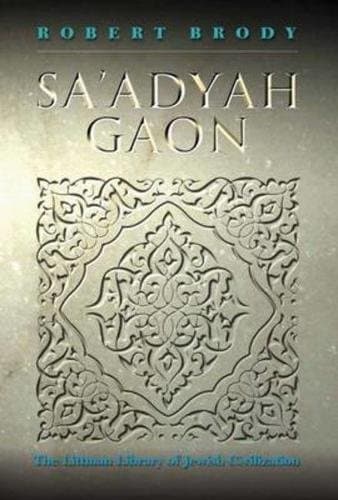
Sa'adyah Gaon (The Littman Library of Jewish Civilization)
by Saadia Gaon, Saadya Gaon, Alexander Altmann, Daniel H. Frank, Joseph Alobaidi, Richard C. Steiner, Robert Brody
Availability Unavailable
This book is not currently available for rent or purchase.
Product Details
ISBN-139781906764906
ISBN-101906764905
PublisherLittman Library Of Jewish Civilization
Published2016-08-11
Edition1
LanguageEnglish
FormatPaperback
Pages192
About This Book
Sa’adyah Gaon was an outstanding tenth-century Jewish thinker―a prominent rabbi, philosopher, and exegete. He was a pioneer in the fields in which he toiled, and was an inspiration and basis for later Jewish writing in all these areas. The last major English-language study of his work was published in 1921, long before Genizah research changed the understanding of the time in which he lived. Robert Brody’s masterly work, covering Sa’adyah’s biography and his main areas of creativity in an accessible way, is therefore a much-needed reassessment of an outstanding figure.
The opening chapter, on the geonic period that formed the background to Sa’adyah’s life (a period on which there are few works in English), is followed by an overview that brings out the revolutionary aspects of his work and the characteristic features of his writings. Subsequent chapters consider his philosophical works; his Bible commentaries; his pioneering linguistic work; his poetry; his halakhic activity (including an examination of his use of the Palestinian Talmud compared to that of the Babylonian Talmud); and his activity as a polemicist, notably against the Karaites. An Epilogue sums up his importance in medieval Jewish culture.
Particularly valuable features of the book are the copious quotations from Sa’adyah’s works, which facilitate familiarity with his style as well as his ideas; the clarity in presenting complex and difficult concepts; the constant assessment of his relationship to his predecessors in his various fields of study and his own unique contributions to each field; and the contextualization of his contribution within the political, cultural, and religious climate of his times so that both revolutionary and conservative elements in his thought can be identified and evaluated.