
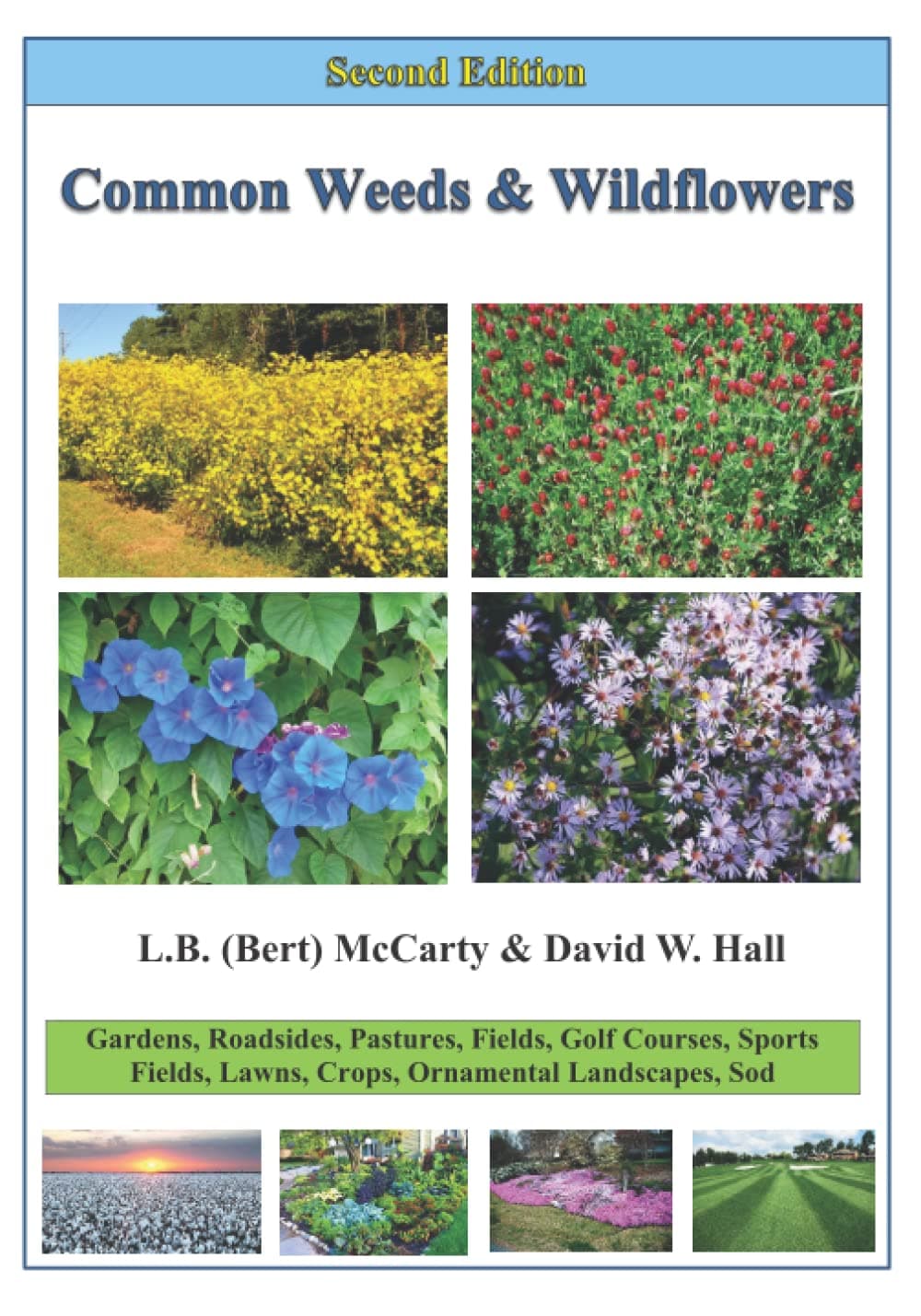
HomeLibraryCommon Weeds and Wildflowers - 2nd edition: Gardens, Roadsides, Pastures, Fields, Golf Courses, Sports Fields, Lawns, Crops, Ornamentals, Sod
ISBN-13: 9798823852432
paperback
466 Pages
Common Weeds and Wildflowers - 2nd edition: Gardens, Roadsides, Pastures, Fields, Golf Courses, Sports Fields, Lawns, Crops, Ornamentals, Sod
by David W. Hall, Lambert Blanchard McCarty
Availability Unavailable
This book is not currently available for rent or purchase.
Product Details
ISBN-139798823852432
PublisherIndependently published
Published2022-05-16
LanguageEnglish
Formatpaperback
Pages466
About This Book
Plants are often desirable, such as for their beauty such as wildflowers, or, can be classified as unwanted, often defined as weeds. Weeds invade our lawns, gardens, and crops ruining the aesthetics and causing economic losses in the way of lost yields and costs for control. Wildflowers are many things. Most think of flowers as subsequent masses of color, but wildflowers can be any flowering plant that provides a visual pleasure: big, small, tiny, vividly colorful, plain, variegated, unusual structure, tall, or short. Plants may be considered a weed in certain situations, such as a flower bed, however, be desirable in other sites such as a lawn or garden.
To be able to fully enjoy or to manage your plant, the first step is identification because the name of the plant is the index to all the information about it. To identify any plant the best approach, if possible, is to simply ask someone who knows plants, secondly, as in this book, one can look for photographs that match. The accompanying descriptions for each photograph can pin down the identification. Once the identification is determined, all the information about that plant can be accessed, including management, control, toxicity, growing conditions, pest control, and, in the case of wildflowers, sources. The authors with their over 70 years of combined experience of identifying and dealing with various weeds and wildflowers, have compiled the most common weeds and several of the thousands of wildflowers that occur in various situations such as roadsides, lawns, gardens, ornamentals, golf courses, recreational areas, pastures, crops, and sports fields throughout the United States. Unlike traditional plant identification, which is based on recognizing floral and reproductive structures, this book attempts to identify the included plants on the basis of their appearance, and from primary vegetative structures, such as leaves and stems. For this reason, illustrations of the basic leaf types and arrangements and the vegetative parts of a grass or grass-like plant are included. The combinations of the line illustrations and the Glossary of Taxonomic Terminology at the end of the book, should assist the user in identifying plants from the photographs and descriptions in the text.
The second edition of this book has been expanded in terms of additional plants plus updating the previously included plants with numerous additional and new photographs and descriptions. Although over one-half million plants have been named throughout the world, the authors have included some of the most common ones found in Gardens, Roadsides, Pastures, Fields, Golf Courses, Sports Fields, Lawns, Crops, Ornamentals, and Commercial Sod Production.